Selling CAS Without Understanding Your Delivery Capacity Is a Risk Most Firms Underestimate
.png)
Client Advisory Services (CAS) has become one of the most talked-about growth strategies in US accounting firms. The appeal is obvious. CAS promises recurring revenue, deeper client relationships, higher margins, and more strategic positioning beyond compliance.
For many firms, it represents a shift away from transactional work and toward ongoing advisory engagement. It feels modern. It feels future-proof.
But there is an operational reality that often gets ignored in the excitement.
CAS is not simply a pricing model or service expansion. It is a delivery model. And if your firm does not have structured workflows and clear capacity visibility, CAS can quickly become the source of strain rather than growth.
CAS changes how work flows through your firm
Traditional compliance engagements are episodic. Tax returns, audits, year-end filings - they have clear start and end points. Work spikes around deadlines, then settles.
CAS is different. It is recurring, embedded, and continuous. Monthly reporting, advisory calls, performance analysis, cash flow planning, forecasting, board packs - the work does not “close.” It rolls forward.
That shift fundamentally alters your operational environment.
Instead of managing peaks and troughs, you are managing steady-state complexity. Instead of billing once per project, you are delivering ongoing value. Instead of working toward deadlines, you are sustaining client expectations month after month.
Without operational discipline, that continuity creates silent overload.
Why CAS often fails operationally
Most CAS initiatives do not fail because firms lack expertise. They fail because the operational foundation is weak.
There are four recurring issues that surface repeatedly in firms that scale CAS too quickly.
1. Scope creep becomes structural
In compliance work, scope creep tends to be episodic. A client adds a schedule or requires clarification, and the engagement expands slightly.
In CAS, scope creep becomes ongoing.
Clients begin with monthly reporting and advisory check-ins. Over time, they expect:
- More frequent performance discussions
- Ad hoc strategic advice
- Cash flow modelling
- Systems input
- Operational troubleshooting
Each addition feels reasonable in isolation. But unless those additions are explicitly structured and tracked, they accumulate.
If your systems do not make incremental effort visible, CAS engagements slowly consume more capacity than originally priced.
2. Recurring services create invisible workload stacking
CAS often includes multiple recurring deliverables: bookkeeping oversight, monthly close review, KPI dashboards, advisory meetings, and follow-up action items.
If workflows are not clearly defined and scheduled, tasks begin to stack. A delayed client response in one month rolls into the next cycle. Review backlogs accumulate quietly. Advisory sessions require more preparation than anticipated.
Without structured workflow management, it becomes difficult to see how much work is truly committed in the upcoming weeks.
Firms believe they have capacity because revenue per client appears manageable. But operationally, the firm may already be near saturation.
3. Client communication friction increases
CAS depends heavily on communication. Unlike compliance work, which is often document-driven, advisory services rely on conversations, follow-ups, and interpretation.
When communication happens across disconnected tools - email threads, calendar notes, spreadsheets, chat messages - effort becomes fragmented.
Time is spent searching for context. Deliverables are delayed while waiting for input. Advisory sessions require reconstruction of history.
That friction does not show up clearly in a revenue report. It shows up as longer hours and cognitive fatigue.
Without centralized visibility into tasks, ownership, and client communication history, CAS delivery becomes reactive rather than controlled.
4. Delivery discipline weakens under growth pressure
When firms push to grow CAS revenue, they often focus heavily on sales and positioning.
But selling recurring advisory without a structured delivery framework is risky.
If workflows are inconsistent, documentation standards vary, and task ownership is unclear, CAS becomes dependent on individual staff performance rather than repeatable systems.
That model does not scale.
The risk is not just burnout. It is margin erosion. When advisory teams compensate for structural inefficiencies with extra effort, profitability compresses even as revenue rises.
Capacity is the Hidden Constraint in CAS Expansion
CAS requires more than technical knowledge. It requires controlled allocation of time and attention.
Every recurring advisory client represents:
- Scheduled preparation time
- Ongoing monitoring
- Communication follow-up
- Analytical review
- Internal coordination
If your firm does not have real-time visibility into who is responsible for each component and how full their workload already is, growth decisions become speculative.
You may add five new CAS clients believing your team can absorb them. In reality, you may have already committed more recurring effort than your available capacity allows.
Capacity strain rarely appears immediately. It surfaces gradually in extended workdays, delayed follow-ups, or reduced quality in advisory conversations.
By the time margin reflects the strain, the operational stress has already taken hold.
CAS Demands Structured Workflow, Not Flexibility Alone
There is a misconception that advisory work should remain fluid and unstructured to allow for creativity and responsiveness.
In reality, the opposite is true.
The more recurring and relationship-based a service becomes, the more discipline it requires in delivery.
Structured workflows do not limit advisory value. They protect it.
Clear stages for:
- Monthly data review
- Performance analysis
- Client meeting preparation
- Action item follow-up
- Internal review
ensure that advisory time is spent on insight, not coordination.
Without structured workflow visibility, advisory work can drift into inefficiency.
Delivery Discipline Protects Margin
When CAS engagements are mapped clearly, and when time is tracked in context of defined tasks, leadership can see patterns early.
You can identify:
- Services that consistently overrun
- Clients that require disproportionate communication
- Roles that are absorbing excess effort
- Stages where work stalls
That visibility allows pricing to be adjusted, scope to be refined, or workflow to be improved before margin suffers.
It also creates confidence in growth decisions. When you know your actual capacity and recurring workload distribution, adding new CAS clients becomes a controlled expansion rather than a leap of faith.
Workflow Visibility Is Not Optional in CAS
If CAS is positioned as a strategic growth area, the firm’s operating system must support that ambition.
You need:
- Centralized workflow management
- Clear task ownership
- Time connected to specific service stages
- Real-time capacity insight
- Service-line level reporting
Disconnected tools make it nearly impossible to see the full operational picture.
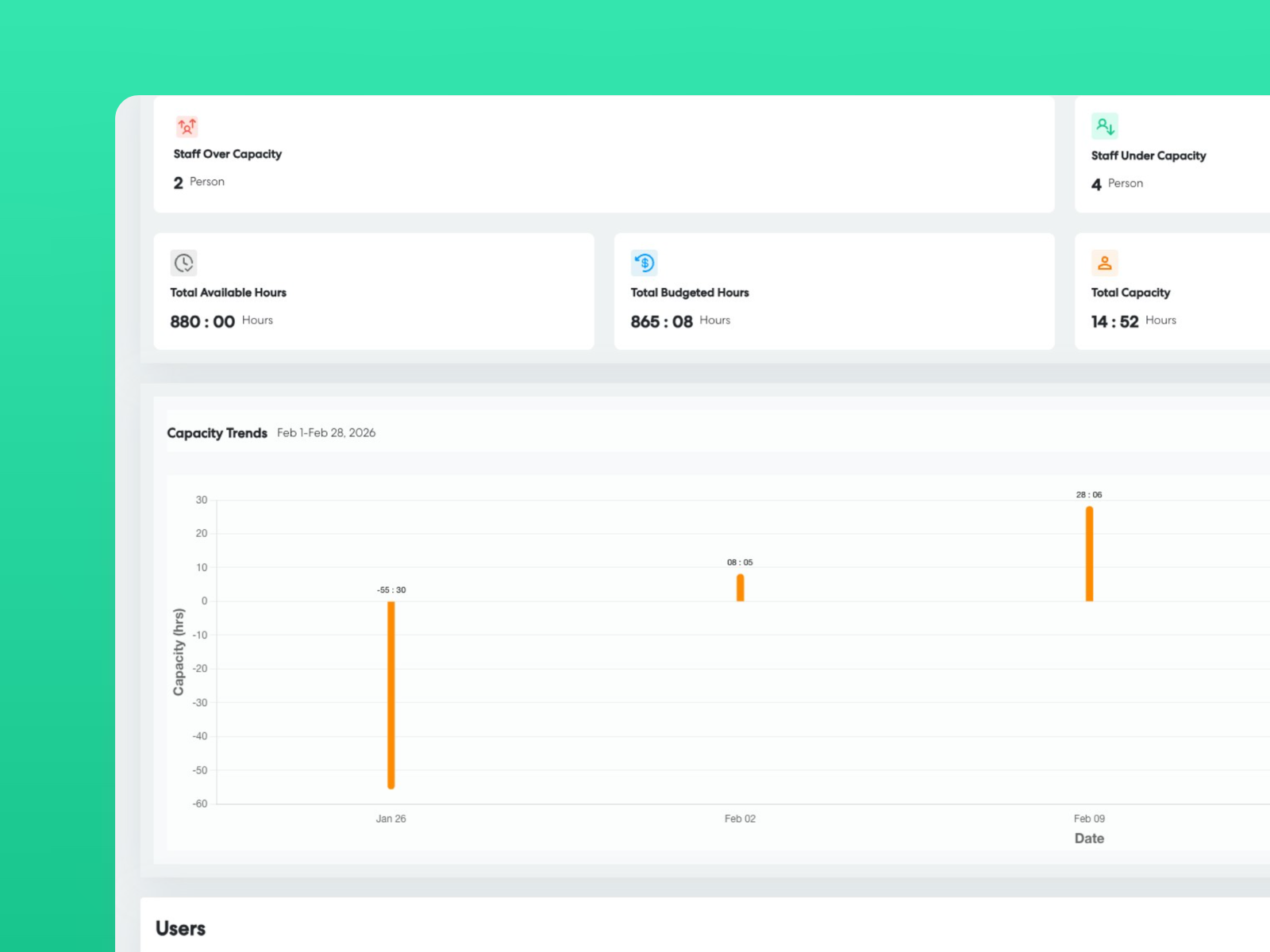
Levvy is designed to centralize client work, connect time directly to structured workflows, and provide real-time visibility into workload and capacity. In the context of CAS, that infrastructure becomes critical.
It allows firms to manage recurring services with discipline rather than intuition. It makes scope creep visible. It exposes bottlenecks before they escalate. And it aligns advisory growth with operational sustainability.
CAS Should Strengthen Your Firm, Not Strain It
There is no question that CAS represents a powerful opportunity for US accounting firms. It deepens client relationships and creates recurring revenue streams that are less seasonal than compliance work.
But CAS amplifies whatever operational structure already exists.
If your workflows are disciplined and your capacity is visible, CAS becomes scalable and profitable.
If they are not, CAS becomes a source of hidden strain.
Before accelerating CAS sales, firms should examine whether their delivery infrastructure can support recurring advisory at scale.
If you want to build CAS on a foundation of visibility and control rather than assumption, learn more about how Levvy supports structured workflow management and capacity clarity at levvy.com.
.png)
.png)
.png)