How Time Becomes the Hidden Line Item in Your Firm (and What to Do About It)

Every partner and practice manager has been here. You hit revenue targets. You’re busy. You’ve checked the boxes on clients, deadlines and tax season. And yet when the accounts close, profitability still doesn’t reflect the effort.
It feels like something is missing. But that “something” isn’t always on the balance sheet. It’s in the hours your team spends on work that never quite makes it onto the profit and loss statement. Time has quietly become the hidden line item in your firm’s equation.
If you can’t see it clearly, you can’t manage it. And if you can’t manage it, time will continue to eat away at your margins and workloads, even when you feel like you’re doing everything right.
This is not just about tracking hours. It’s about understanding what those hours are telling you about process, capacity, workflow and the real cost of getting work done.
The Blind Spot: Why Time Matters More Than You Think
Many firms approach time tracking as a billing tool. It’s there to justify invoices or comply with client agreements. But time is far more valuable as a business insight, especially when it’s connected to workflow and delivery performance.
Research into accounting practice management highlights that practice management platforms centralize workflows, client work, time tracking and billing in one place, allowing teams to work more efficiently and with greater visibility.
If you only look at time for billing, you’re missing what it reveals about:
- Scope creep - work that slides outside the agreed engagement but still eats hours
- Workflow friction - delays and re-work hidden in manual handoffs
- Capacity constraints - where work bottlenecks and who is overloaded
- Profit erosion - when more hours go into delivery than estimated
The danger is that these patterns remain invisible when work is tracked only for revenue. They don’t show up as red flags in your accounts until it’s too late.
When Busy Doesn’t Equal Profitable
Busy season is the perfect example. The phones ring, inboxes surge, and everyone is heads-down. Partners and managers assume high workload equals high value. But the reality is more complex.
A firm can be:
- Busy - lots of hours logged
- Operationally stressed - staff overwhelmed
- Perceptually productive
…but not profitable.
Here’s why:
1. Hours vs. Value
Not all hours are created equal. Time spent on high-value advisory or client work should support profitability. But time spent firefighting, correcting errors, navigating poor workflows, or handling manual tasks adds cost without proportionate value.
2. Reactive Work is Invisible Work
Tasks that pop up unplanned like email follow-ups, chasing documents, and ad-hoc client requests, rarely appear in forecasts. They get logged as time, but they don’t show up in proactive planning. And when these hours balloon, you only notice after margins shrink.
3. Lack of Context
Just knowing how many hours were logged tells you little. You need context: what was being worked on, whether the effort was planned, how it affected timelines, and whether it revealed inefficiencies in your delivery model.
This is where time transforms from a billing tool into a strategic lens on your firm’s performance.
The Role of Practice Management in Revealing Hidden Time Costs
Modern practice management software does more than capture time. It connects time to work, workflows, resources, and outcomes so that firms can interpret what the hours actually mean.
A platform like Levvy does several things that make time intelligent and actionable:
- Unified view of all work across the firm - tasks, projects, deadlines and client work all in one workspace, eliminating siloed tracking.
- Automated time tracking tied directly to workflows and tasks, removing the need to switch between tools.
- Breakdowns by workflow, team member and rate, making it easier to audit hours and see where time goes.
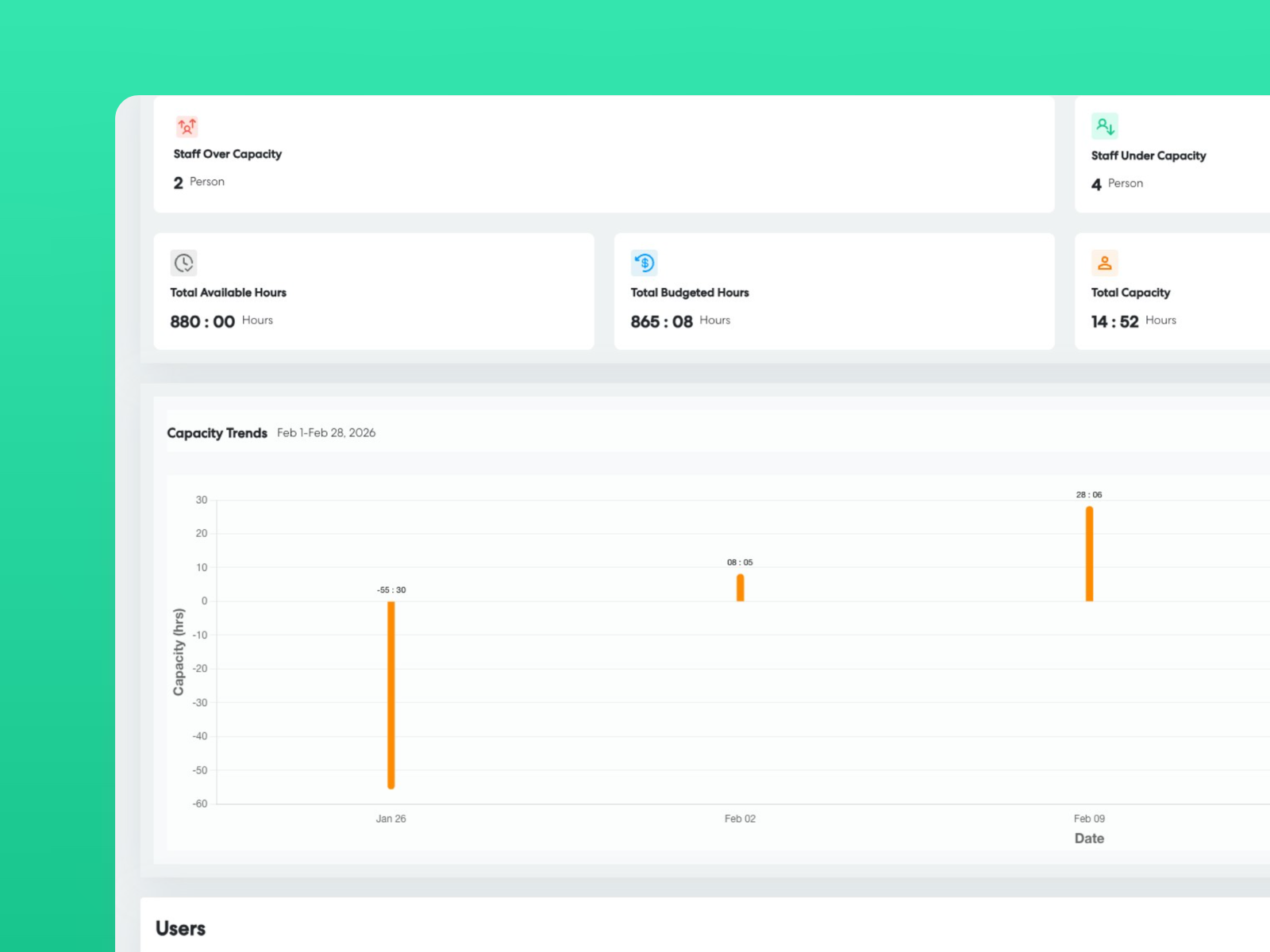
- Capacity and resource visibility so managers can see who’s overloaded or under-utilized in real time.
- Workflow templates and automation that reduce repetitive or manual work, freeing up hours for higher-value activity.
This doesn’t just cut down on admin overhead. It turns time into a performance signal, one that helps you spot inefficiencies, make decisions and plan capacity instead of reacting to chaos.
Four Signals Hidden Hours Reveal
To use time as strategic insight, focus on four key patterns that usually hide in plain sight:
1. Unplanned Workload Growth
If unplanned or reactive work increases during certain periods (like tax deadlines or end-of-month close), it shows where your processes are weakest. This often reveals gaps in planning, delegation or workflow structure.
2. Overruns and Under-estimation
Jobs consistently take more hours than estimated. This isn’t a people problem. It’s a scoping and expectation problem. Either estimates are too optimistic, or delivery steps aren’t mapped with enough detail.
3. Bottlenecks and Delays
When tasks stack up with specific team members, it indicates capacity constraints or poor task allocation. It’s a sign you need to refine how work is assigned, managed and balanced.
4. Value vs Effort Mismatch
Some clients or services consume disproportionate time compared with value delivered. Without visibility, these drains can quietly sink margins before anyone notices.
Turning Insight into Action
Identifying hidden hours won’t change your firm overnight. But it creates clarity that makes your next steps far more targeted and productive.
Here’s how to start:
1. Map Your Workflows
Document and standardize your most common processes (like tax, bookkeeping, advisory, compliance) so you know what “done” looks like. Break these into tasks that can be measured.
2. Track Time in Context
Connect time logs to specific workflows and tasks, not just to clients or projects. This gives context to hours, revealing where effort clustered and why.
3. Monitor Capacity Regularly
Review who is overloaded, who has slack, and where bottlenecks occur consistently. This understanding helps balance workloads and plan future work more accurately.
4. Use Data to Inform Decisions
Leverage reporting and analytics to ask:
- Which services drive the best margin after time costs?
- Which clients consistently overrun?
- Where are repetitive tasks consuming hours that could be automated?
When you interrogate time data this way, it informs pricing, staffing, process improvements and even client selection.
Why This Matters More Now
Accounting is no longer just number crunching. Firms are expected to deliver advisory, planning, automation and strategic insights alongside compliance and reporting. That’s a broader set of services, which means more complex workflows and capacity pressure.
At the same time, clients increasingly expect quick turnaround, high responsiveness, and strategic value. If you can’t see and manage how time flows through your firm, it’s almost impossible to deliver both efficiently and profitably.
Practice management software gives firms the visibility they’ve never had before, connecting time, work and outcomes in a way that makes sense of what your team actually does every day.
The Hidden Line Item Isn’t an Expense
Time doesn’t have to be the thing that undermines your margins and blindsides your planning cycles. Once you shift from measuring time to understanding time, you unlock a powerful source of insight about your operations.
When time is visible, contextualized and connected to workflows and capacity, it becomes a tool for better decisions, not just a record of hours worked.
That’s where firms begin to move from being busy to being deliberately efficient, resilient and profitable.
If you’re ready to go beyond tracking hours and start interpreting them in a way that drives clarity and performance, it’s worth exploring what a practice management platform like Levvy can do for your firm’s operational visibility and growth.
Learn More About Levvy
Levvy brings all your work, clients, tasks, time, and insights into one centralized platform. By eliminating silos and giving you real-time visibility across your entire practice, Levvy helps you uncover hidden signals in your data and make better operational decisions.
👉 Learn more about how Levvy can help your firm turn time into strategic insight at levvy.com.
.png)
.png)
.png)